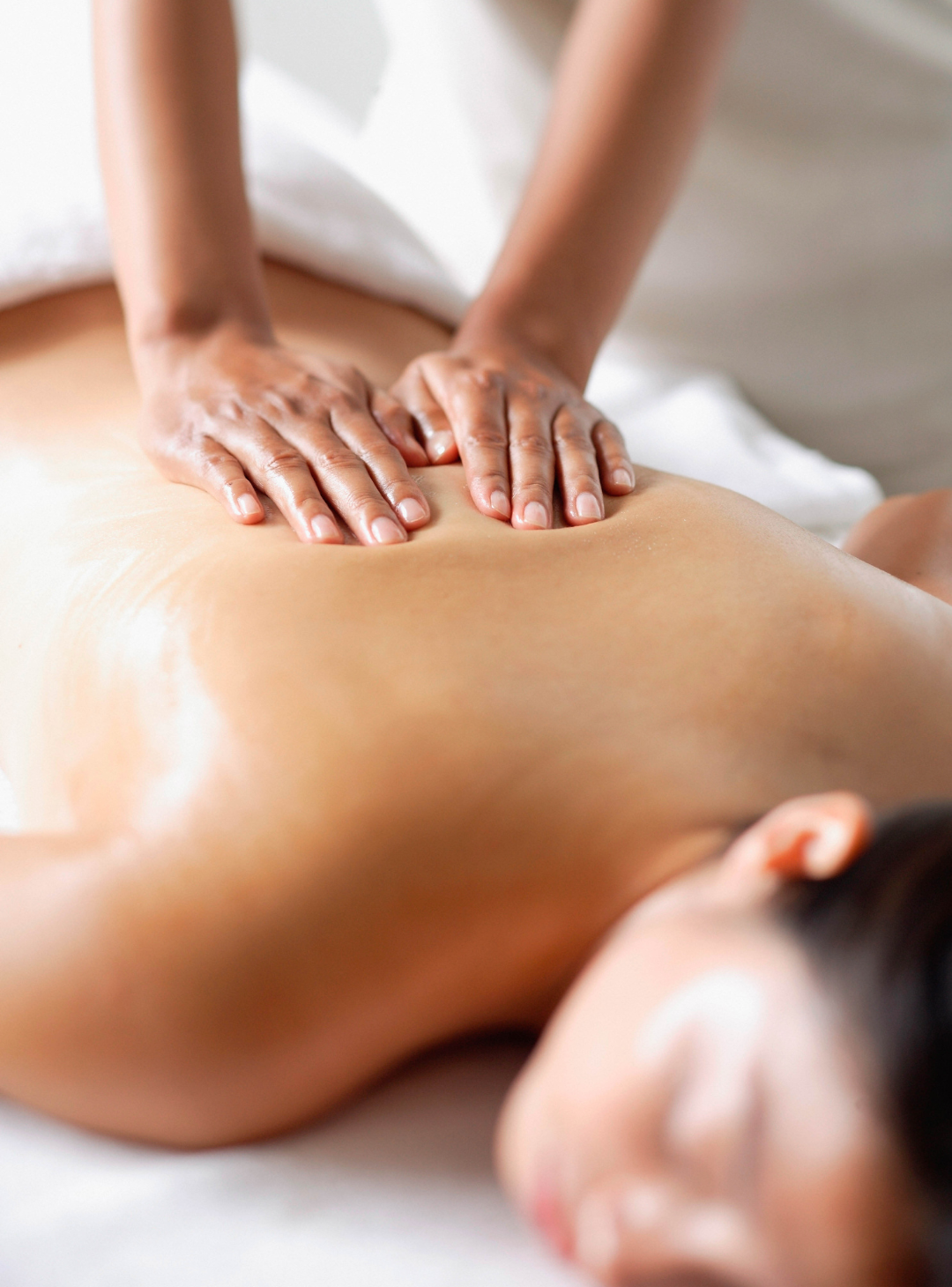
April is Stress Awareness Month—and it’s a timely reminder of something we see every single day: most people are carrying far more stress than they realize. Not just mentally, but physically. Because stress doesn’t stay quietly in your thoughts. It moves into your body, and it tends to settle in.
How stress shows up physically
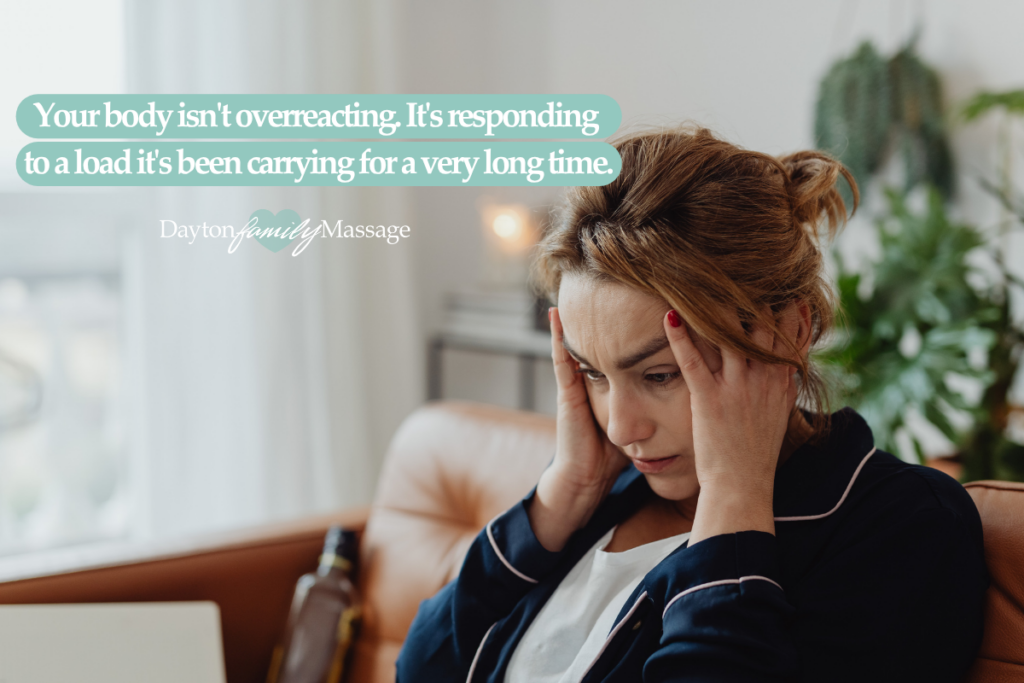
The signs are easy to overlook at first. But over time, they become harder to ignore. You might recognize some of these:
- Shoulders that stay tight, no matter how much you try to relax them
- A stiff neck that keeps returning, even without an obvious cause
- Frequent headaches that seem to come out of nowhere
- Jaw clenching or teeth grinding, especially at night
- Restless or poor-quality sleep—even when you’re exhausted
- A persistent “on edge” feeling that you just can’t shake
Here’s the tricky part: these symptoms often start to feel normal. You get used to them. You push through. You assume this is just what life feels like now. But your body isn’t just being dramatic—it’s communicating something important.
“Your body isn’t overreacting. It’s responding to a load it’s been carrying for a very long time.”
What’s really happening inside your body
When you experience stress, your nervous system activates what’s known as the fight-or-flight response. This is a brilliant, protective mechanism designed to help you react quickly in moments of real danger.
The problem is that most of us aren’t dealing with short, isolated bursts of stress. We’re navigating constant, low-level pressure—packed schedules, competing responsibilities, mental load, financial worries, relationship strain. The list goes on. So instead of cycling out of that stress response, the body stays stuck in it.
Over time, living in that state leads to chronic muscle tension, increased inflammation, persistent fatigue, and a nervous system that simply doesn’t know how to fully unwind—even when you finally have a free moment.
How massage helps regulate your stress response
This is where massage becomes something more meaningful than a luxury or a treat. When the body has been locked in a stress state, massage helps it shift gears—moving out of that fight-or-flight activation and into a calmer, more regulated state.

Specifically, massage supports your nervous system by:
- Releasing chronic muscle tension held in the shoulders, neck, and jaw
- Lowering cortisol, the body’s primary stress hormone
- Encouraging slower, deeper breathing—which directly calms the nervous system
- Promoting better, more restorative sleep
- Giving your body the signal that it is safe enough to finally rest
For many clients, a massage session is genuinely the first time their body has slowed down in weeks. That kind of reset matters more than it might seem.
Why this matters for your everyday life
When your body gets a real break from stress—even temporarily—you begin to notice small but meaningful shifts. You move a little more easily. You feel less reactive and more grounded. You sleep better. You stop bracing for impact every moment of the day.
The goal isn’t to eliminate stress entirely—that’s not realistic, and it’s not necessary. The goal is to give your body the support it needs to handle stress more effectively, so it doesn’t accumulate into something that’s much harder to manage.
A simple invitation
If you’ve been feeling off, tense, foggy, or more overwhelmed than usual—take that as a message from your body, not just your mind. Taking care of yourself doesn’t have to be complicated or time-consuming. Sometimes it starts with something as simple as giving your body a genuine chance to rest.
You’ve been showing up for everything and everyone else. It might be time to show up for yourself.
Ready to give your body a reset?
Book a session this month and experience firsthand how much your body can change when it finally gets to slow down.