
You wake up one morning and your neck feels stiff. Your shoulder is tight. Your low back is acting up — again. It’s easy to assume the discomfort appeared overnight, but most muscle tension doesn’t happen that way. It builds gradually, as your body responds to stress, posture, movement habits, and the demands of daily life.
Your body has usually been sending signals for a while. Understanding where that tension comes from is the first step toward preventing it from becoming a bigger issue.
Why muscle tension builds over time
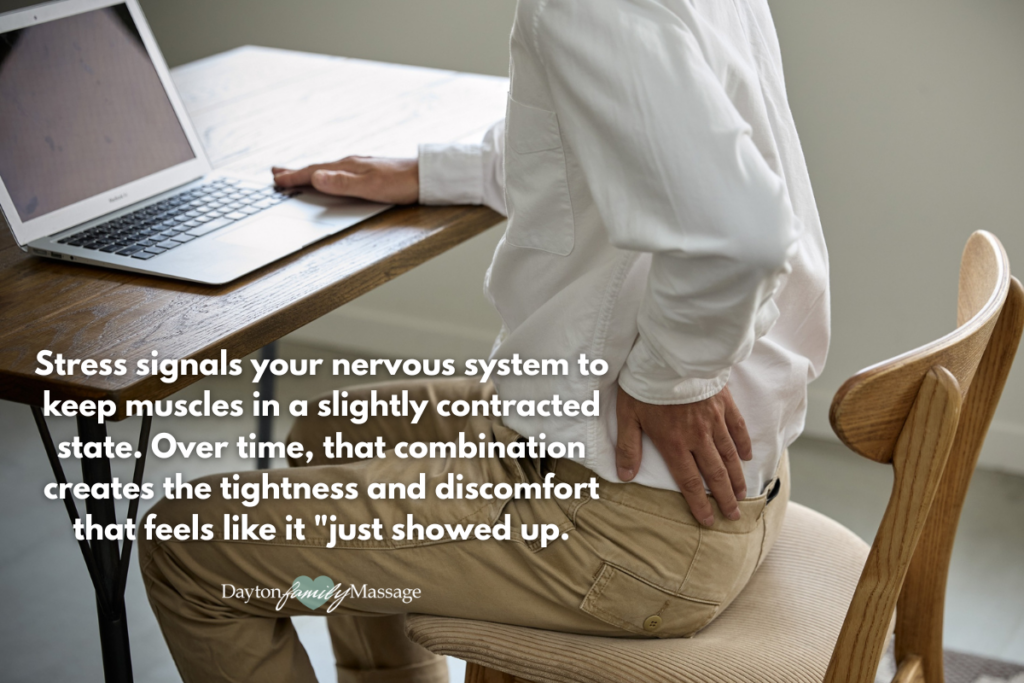
Your muscles are constantly adapting to how you use them. When you spend hours sitting, working at a computer, driving, or repeating the same movements, certain muscle groups stay engaged far longer than they’re designed to. Meanwhile, stress signals your nervous system to keep muscles in a slightly contracted state. Over time, that combination creates the tightness and discomfort that feels like it “just showed up.”
Some of the most common contributing factors include:
- Prolonged sitting or desk work
- Poor posture or screen positioning
- Repetitive movements at work or during exercise
- Emotional or physical stress
- Lack of regular movement and recovery time
When these factors stack up day after day, muscles can settle into a semi-tight resting state — and that’s where stiffness and soreness take hold.
The early signs your body is asking for help
Before tension turns into real pain, your body usually offers subtle warning signals. Catching them early makes all the difference.

Watch for:
- Stiffness in the neck or shoulders
- Soreness between the shoulder blades
- Tight hips or recurring low back discomfort
- Headaches that seem to originate from the neck
- Reduced flexibility or a smaller range of motion
These aren’t random symptoms — they’re your body’s way of asking for attention. Ignoring them often allows the tension pattern to become more stubborn and harder to address.
How massage therapy relieves muscle tension
Massage therapy works directly with the muscles and surrounding soft tissue. Manual pressure and targeted movement help release tight areas while improving circulation to the tissue that needs it most.
Regular massage may help:
- Reduce muscle tightness and guarding
- Improve blood flow to tense areas
- Increase flexibility and range of motion
- Calm an overactivated nervous system
- Lower stress-driven muscle contraction
Many clients notice that after a session, their muscles feel looser and movement feels easier. That’s because the body has been given the chance to return to a more balanced resting state — something it often can’t do on its own when daily stressors keep piling up.
Why massage works best as preventative care
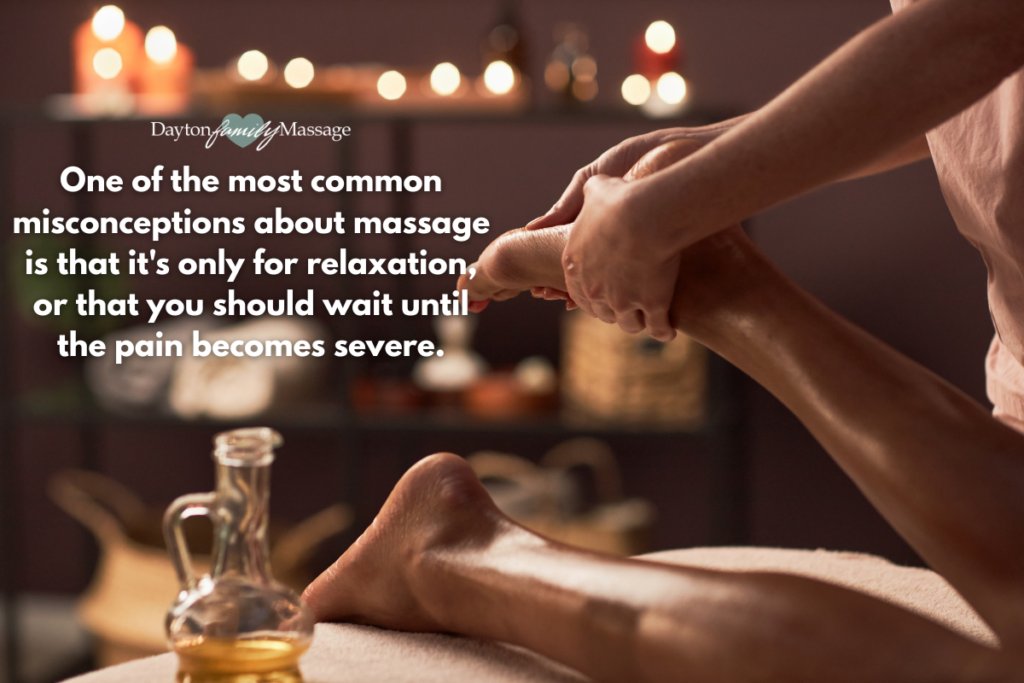
One of the most common misconceptions about massage is that it’s only for relaxation, or that you should wait until the pain becomes severe. In reality, massage is most effective when it’s used as part of a regular wellness routine.
Think of it as maintenance for your body. Just as consistent exercise and stretching support your long-term health, regular massage helps keep your muscles functioning comfortably — before tension becomes chronic pain. Addressing patterns early is always easier than reversing them later.
When it might be time to book a session
If you keep noticing the same tight areas returning week after week, that’s a clear signal your muscles could benefit from additional support. Massage can help interrupt the tension cycle and give your body the reset it’s been needing.
At Dayton Family Massage, we regularly help clients manage the tension that accumulates from everyday life — work stress, parenting, workouts, and long hours at a desk all take a toll.
Your body works hard for you. Taking care of it helps you keep doing the things you love.