Your stress isn’t just in your head — here’s where it actually lives
Mental Health Awareness Month is a good reminder that what happens in your mind doesn’t stay there. Stress travels through your entire body, and understanding that connection is the first step to actually feeling better.
Stress is physical — not just emotional
When we talk about mental health, the conversation usually centers on thoughts, moods, and emotions. But stress has a body. It shows up in the places you hold tension, the aches that don’t make sense, the fatigue that sleep doesn’t fix.
If any of these sound familiar, your nervous system is likely involved:
Chronic shoulder tension is one of the most common signs your nervous system is stuck in “alert” mode — even when there’s no immediate threat.
Bruxism (teeth grinding and jaw tension) is strongly linked to psychological stress, often happening unconsciously during sleep or while focused.
Caused by constriction in the muscles of the neck, scalp, and shoulders — a direct physical response to prolonged emotional stress.
When your body sustains a state of physiological tension for too long, it becomes exhausted — even if you haven’t “done” anything particularly demanding.
The nervous system: your stress highway
Your autonomic nervous system has two primary modes. When you’re under stress, it activates the sympathetic branch — the well-known “fight or flight” response. This is incredibly useful when facing a real threat. The problem is that modern life triggers it constantly, and many people never fully leave it.
- Heart rate & blood pressure
- Cortisol levels
- Muscle tension
- Shallow breathing
- Digestive activity
- Heart rate & blood pressure
- Cortisol levels
- Muscle tension
- Deeper, slower breathing
- Digestion & cellular repair
Most people spend far too much time in that left column. The goal isn’t to eliminate stress — it’s to give your body enough time in the right column to actually recover.
When your body is bracing, your mind can’t rest. The two aren’t separate systems — they’re in constant conversation.
What massage actually does to your nervous system
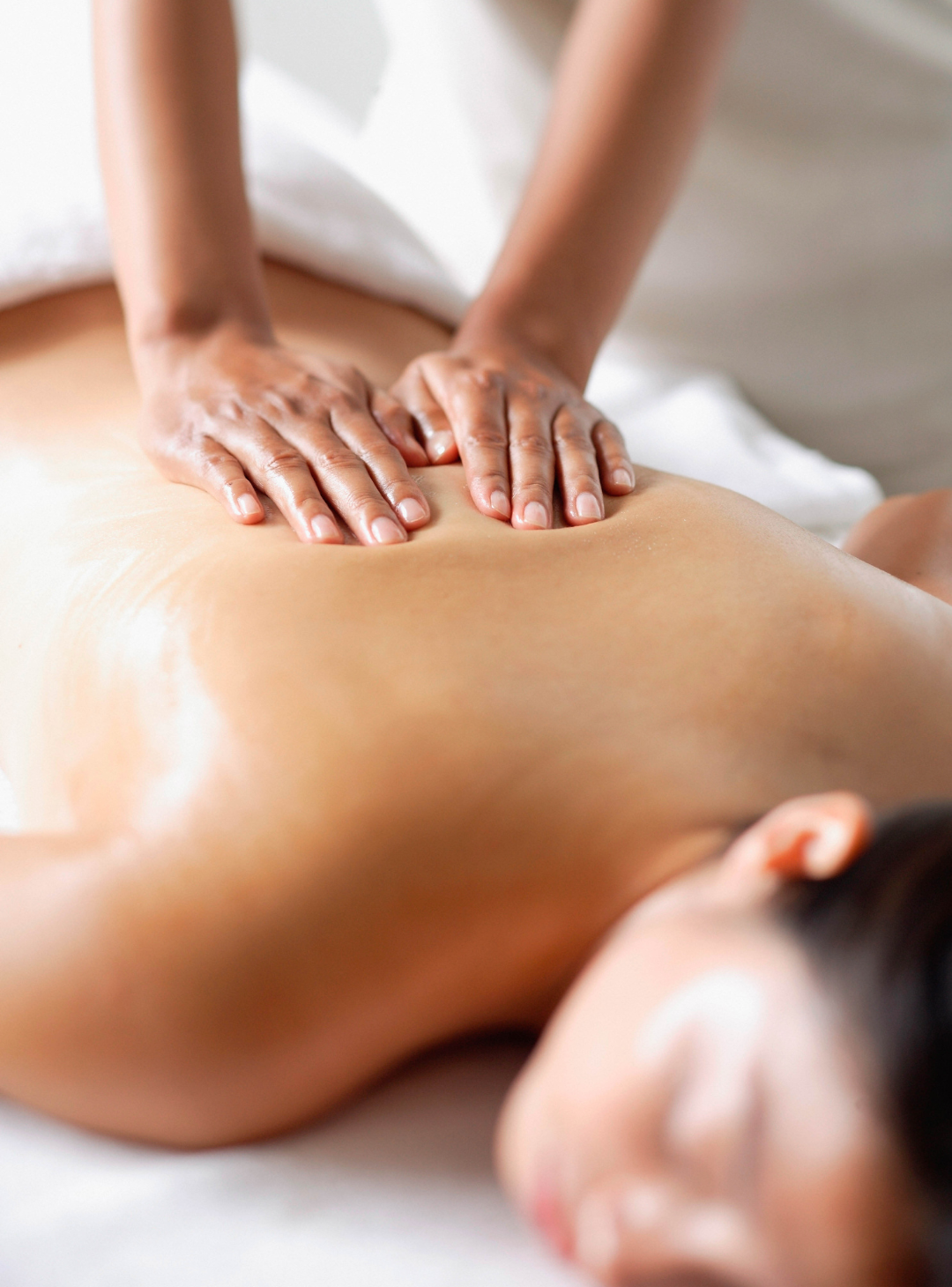
Massage isn’t just a way to address sore muscles. At a physiological level, therapeutic touch activates pressure receptors beneath the skin that send signals directly to the brain — signals that essentially say: you are safe, you can let go.
This triggers a measurable shift into parasympathetic activation. Your heart rate slows. Your muscles release their braced state. Your breathing deepens without any conscious effort.
Multiple studies have found that massage therapy significantly lowers cortisol (the primary stress hormone), while increasing serotonin and dopamine levels. Research published in the International Journal of Neuroscience found cortisol reductions of up to 31% following massage, alongside significant reductions in self-reported anxiety and depression scores.
This is why people often feel a mental clarity after a massage that they weren’t expecting. It isn’t just that their muscles feel looser — it’s that their entire nervous system has been given permission to downregulate. When the body stops holding, the mind follows.
Mental health care doesn’t always look like therapy
Therapy, journaling, medication, mindfulness — all of these have their place. But the body-based approaches to mental health are often underutilized, even though they can be some of the most immediate and accessible.
Regular massage can be a legitimate part of a mental health care routine, not just an occasional treat. Especially during high-stress seasons, giving your nervous system a consistent opportunity to reset can reduce baseline anxiety, improve sleep quality, and make you more resilient to the stress that does come.
Taking care of your mental health doesn’t always mean doing more. Sometimes it means creating the conditions for your body — and your nervous system — to finally rest.
Ready to give your nervous system a break?
If you’re in the Dayton, Kettering, or Centerville area, we’d love to take care of you. Our team is here to help your body do what it’s designed to do — recover.
Book a massage appointment