When we think about “balance,” it’s easy to picture perfectly planned mornings, packed calendars, and checking all the right boxes. But real balance does not come from doing more. It comes from feeling better in your body and calmer in your mind.
Balance is not a productivity contest. It is about how your nervous system feels at the end of the day.
What Balance Actually Looks Like
True balance is not loud or flashy. It often feels subtle, but powerful.
Balanced living can look like:
- Waking up without feeling immediately overwhelmed
- Moving through your day with less tension in your shoulders or jaw
- Sleeping more deeply and waking up more rested
- Recovering faster from stress instead of staying stuck in it
- Feeling more present, not constantly rushed
These are signs that your nervous system is supported, not pushed.
Why the Nervous System Matters
Your nervous system is constantly deciding whether you are safe or stressed. When life feels busy, unpredictable, or emotionally heavy, your body can stay in a low-grade stress response for long periods of time.
This often shows up as:
- Tight muscles that never seem to relax
- Headaches or jaw clenching
- Shallow breathing
- Fatigue even after rest
- Feeling on edge or easily overstimulated
Balance starts when the body feels safe enough to let go.
Rest Is Not the Same as Recovery
Scrolling on your phone, watching TV, or collapsing into bed can feel restful, but they do not always help your body recover.
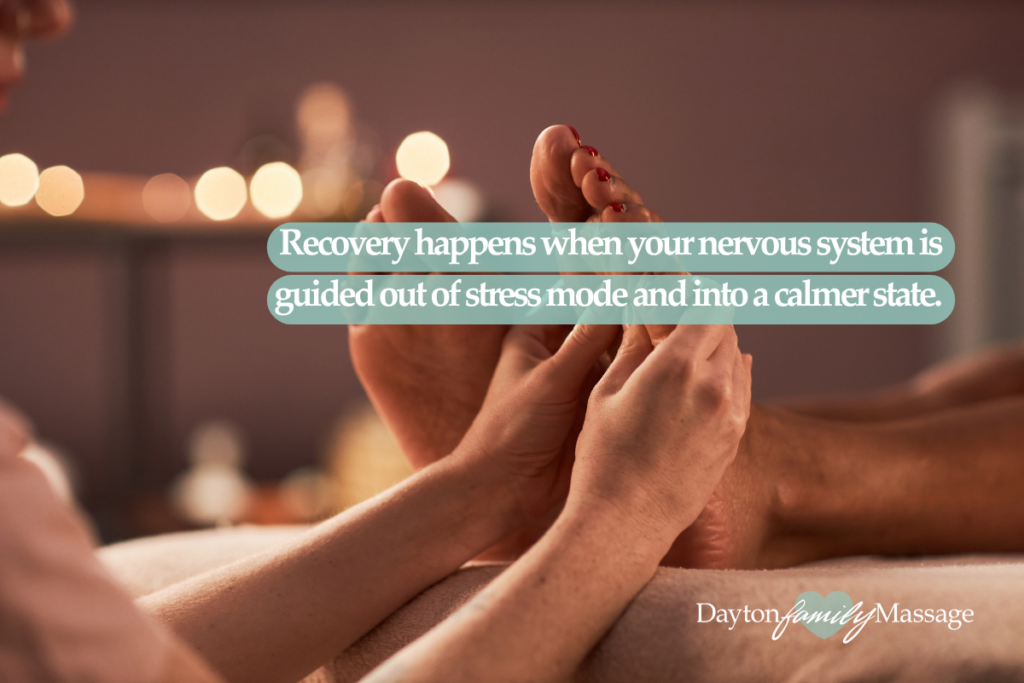
Recovery happens when your nervous system is guided out of stress mode and into a calmer state. This can include things like gentle movement, deep breathing, time outdoors, or bodywork that encourages relaxation at a deeper level.
Sustainable Routines Over Perfect Ones
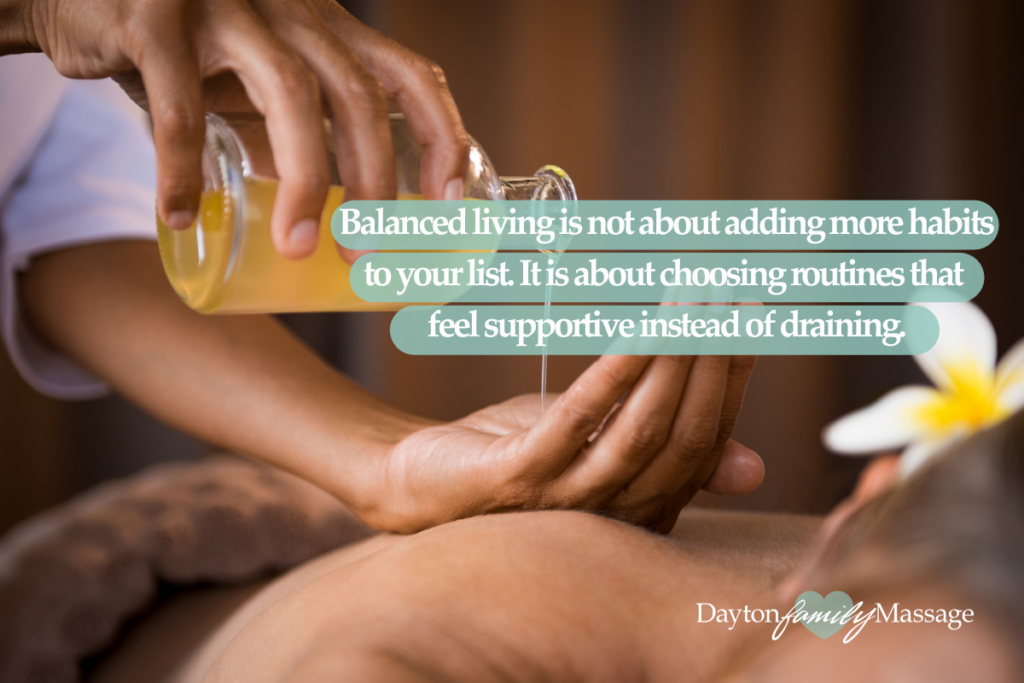
Balanced living is not about adding more habits to your list. It is about choosing routines that feel supportive instead of draining.
A sustainable routine:
- Fits into your real life
- Helps your body unwind instead of tighten
- Feels flexible, not rigid
- Supports you consistently, not just occasionally
Balance is something you practice, not something you achieve once and move on from.
Where Massage Fits In
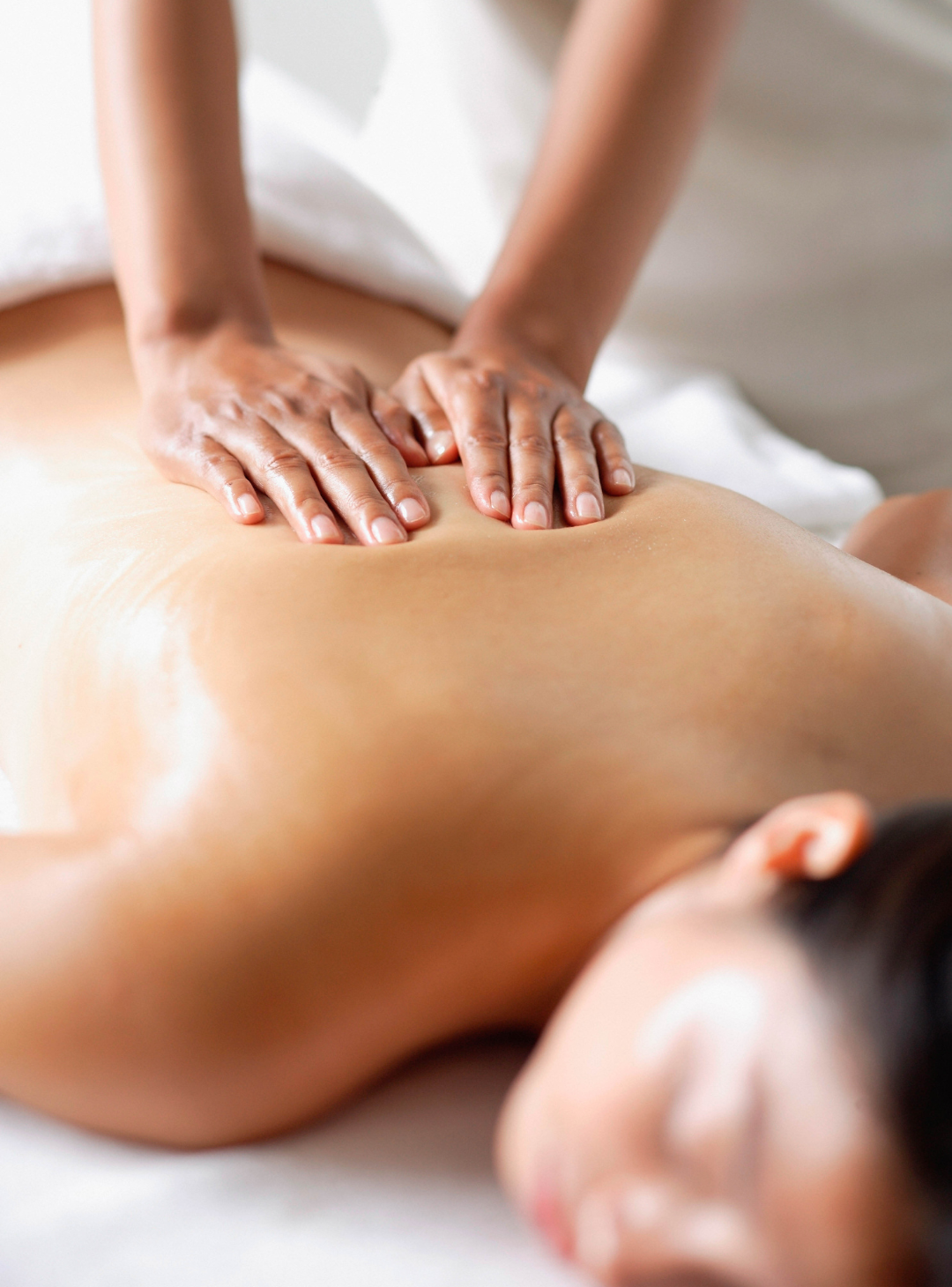
Massage does not have to be another thing on your to-do list. When used intentionally, it can be a supportive tool that helps your body remember how to relax.
Massage can help:
- Calm the nervous system
- Reduce muscle tension caused by stress
- Improve body awareness
- Support better sleep and recovery
Many clients find that regular massage helps them feel more grounded and balanced overall, not just less sore.
Balance Is a Feeling
At the end of the day, balance is not about how full your schedule is. It is about how you feel living inside your body. If something helps you feel calmer, more comfortable, and more at ease, it belongs in your version of balance.